News Website (iasianews.net) I Asia News

I Lost Not
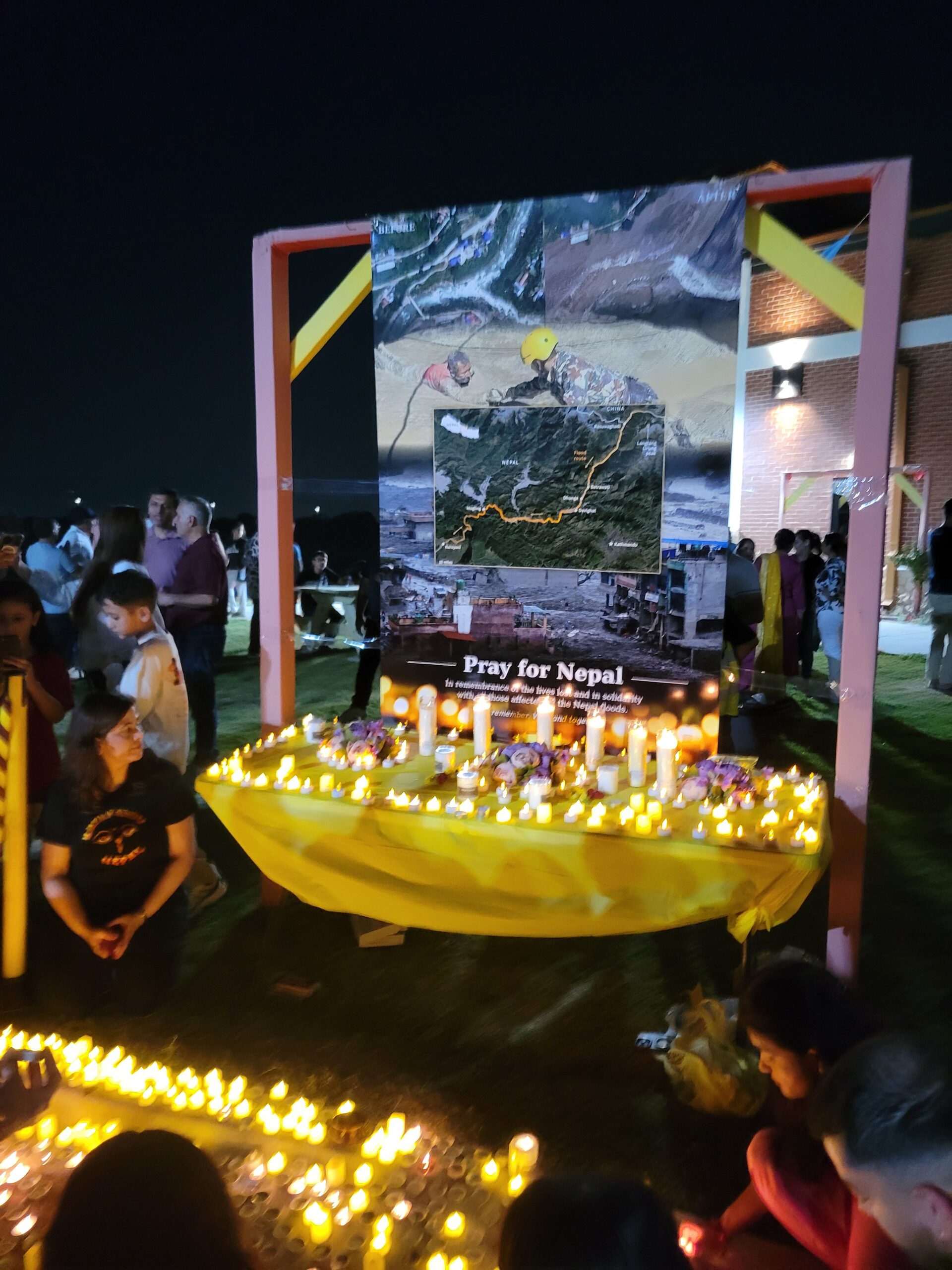
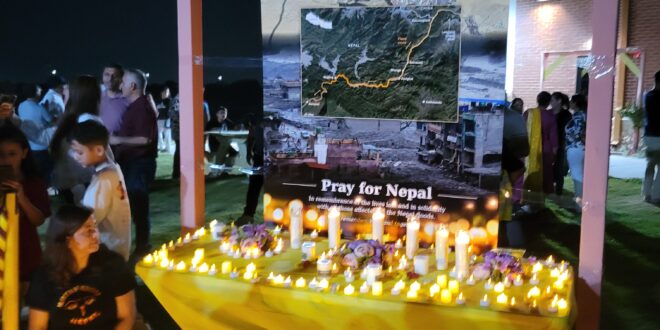
Only the Markets, But My Relatives and Friends as Well ………..By Ram Chandra Bhatta, On the morning of August 26, upon waking up, my hand reached for my cellphone resting on the charger. As I scrolled through social media, a photograph caught my eye and stopped me in my tracks.
The Jalapa Devi Temple, located in Devighat—just two kilometers from my birthplace—appeared almost completely submerged due to the rising river water. Since the temple frequently gets inundated during the monsoon season whenever the flow of the Tadi and Trishuli rivers surges, the photo did not initially alarm me. Such scenes are a normal occurrence during the monsoon.
According to the sacred Hindu text Shree Swasthani, Lord Shiva (Mahadev) wandered the world in grief while carrying the body of his deceased first wife, Sati Devi. As he traveled, the places where her bodily parts fell were sanctified as holy pilgrimage sites. The text describes Devighat as one of those sacred sites, created where a part of Sati Devi’s body fell, leading to the manifestation of Goddess Jalapa Devi.
As I continued scrolling through Facebook, another video appeared. It depicted the historical Trishuli Bazaar being swept away by the river and turned entirely into a barren floodplain. It was then that I was struck with profound shock. I sprang up from bed and immediately called out to my wife, Laxmi, who was in the prayer room.
I spent the next two minutes on social media, only to see that where the Jalapa Temple once stood was now a desolate stretch of sand, and our main market in Devighat was reduced to ruins by the flood. The floodwaters had swept away the settlements and markets of Betrawati, Tupche, Trishuli Bazaar, Dhunge Bazaar, Devighat, and Mahadevphat in my home district of Nuwakot, turning them into riverbeds.
I immediately dialed my mother, father, brother, sister-in-law, and sister in Nuwakot. Messenger failed to connect, and WhatsApp was unresponsive. My anxiety for my family mounted, and I began to panic. Although our house sits nearly 500 meters above the river level, the sheer scale of the surging river made me fear the worst, especially knowing anything could happen if family members were away from home.
I then placed a direct call from the U.S. to my father’s mobile phone, and the call finally connected. “The flood hasn’t reached our house, but the river level has risen significantly just below us. Devighat Bazaar has been completely destroyed,” my father explained concisely.
“There has been no electricity since this morning, so my phone battery is running out. So far, we haven’t received any news of harm to our relatives here,” he added.
By the time I spoke with my father, nearly ten hours had already passed since the disaster struck. Though I usually stay up late, I had gone to bed early on the night the flood occurred in Nepal, which is why I received the news ten hours after the event.
While learning that my immediate family was safe brought a sense of relief, my concern shifted to other relatives and friends. My thoughts turned to loved ones in nearby Devighat Bazaar and Dhunge Bazaar. Even for those at the scene, there was no immediate information about who survived, who was swept away, or where anyone was. Being on the other side of the world made obtaining accurate information even more difficult.
Trishuli Bazaar—the area hardest hit by the flood—had stood in the same location for nearly three hundred years. Annual flooding along the Trishuli River during the monsoon season is normal, but there was no historical record of floodwaters ever reaching the level of the bridges.
My birthplace lies 60 kilometers west of Nepal’s capital, Kathmandu. Sixty-six years ago, my village was connected to the road network during the construction of the Trishuli Hydropower Project—Nepal’s third hydropower station. Both the Kathmandu–Trishuli road and the Trishuli Hydropower Project were constructed with support from neighboring India. Late King Mahendra laid the foundation stone for the plant during the tenure of Nepal’s first democratically elected Prime Minister, B.P. Koirala. The station generated 21 megawatts of electricity.
Twenty years later, another 14-megawatt hydropower plant was built at Devighat, also with Indian assistance. Both plants operated under the state-owned Nepal Electricity Authority.
In addition to these two plants, six other operational hydropower facilities were buried by the floodwaters. Hundreds of workers and staff members remain trapped inside underground hydropower tunnels, where they have been stranded for two weeks. Their condition remains unknown.
The Bhote Koshi River, which enters Nepal from Rasuwagadhi near the China-Nepal border, did not merely destroy human settlements along its banks; it severely damaged eight operating hydropower plants with a combined capacity of 748 megawatts along the river corridor. Five additional plants currently under construction were also destroyed. Furthermore, 68 bridges—both motorable and pedestrian—were swept away.
The exact number of missing persons remains unconfirmed. Preliminary estimates suggest around 5,000 people are missing. The bodies of 1,300 victims have been recovered, while 13,500 people have been rescued and moved to safe locations.
However, 7,570 homes in the affected regions have been destroyed, with 95 percent of houses rendered completely uninhabitable. Where homes once stood, the Trishuli River now flows. In many places, massive piles of sand and boulders have made rebuilding impossible.
I lost a dozen friends to this flood. Among those who survived, many now have neither homes nor land.
It is doubtful whether our main market of Devighat will ever return to its former state. Seeing historical markets like Dhunge and Trishuli, adjacent to the district headquarters, completely devastated breaks my heart. The loss of friends and relatives leaves me deeply concerned for the future of their surviving family members and children.
Realizing that those missing in the flood are unlikely to return alive, surviving family members have performed final rites and mourning rituals according to tradition. However, they received no government assistance even for conducting these rites.
At present, 12 billion Nepali rupees (approximately 80 million USD) has been collected in the government relief fund for the victims. Displaced survivors are currently housed in temporary shelters set up in public schools, covered halls, and health centers. However, the government has yet to decide where and how to arrange long-term resettlement for them.
From the United States, I contributed to the official government fund and also sent financial support directly to families of missing individuals. As a Nepali citizen, it is my duty to assist whenever there is suffering in my homeland—all the more so during a tragedy where acquaintances, close relatives, and loved ones are missing and enduring profound pain.
In my own lifetime, and based on stories passed down through generations—from my grandmother and her ancestors before her—no flood as catastrophic as this has ever been recorded on the Trishuli River.
After leaving the affected region, the Trishuli River flows to Devghat in Chitwan—a revered pilgrimage site in Nepal—where it merges with several other rivers to form the Narayani. Upon crossing the border into India, the Narayani becomes the Gandak River. In Patna, Bihar, the Gandak joins the Ganges (Ganga). As the river enters Bangladesh, it is known as the Padma, and finally, as it empties into the Bay of Bengal, it flows under the name Meghna.
The Jalapa Devi Temple, located in Devighat—just two kilometers from my birthplace—appeared almost completely submerged due to the rising river water. Since the temple frequently gets inundated during the monsoon season whenever the flow of the Tadi and Trishuli rivers surges, the photo did not initially alarm me. Such scenes are a normal occurrence during the monsoon.
According to the sacred Hindu text Shree Swasthani, Lord Shiva (Mahadev) wandered the world in grief while carrying the body of his deceased first wife, Sati Devi. As he traveled, the places where her bodily parts fell were sanctified as holy pilgrimage sites. The text describes Devighat as one of those sacred sites, created where a part of Sati Devi’s body fell, leading to the manifestation of Goddess Jalapa Devi.
As I continued scrolling through Facebook, another video appeared. It depicted the historical Trishuli Bazaar being swept away by the river and turned entirely into a barren floodplain. It was then that I was struck with profound shock. I sprang up from bed and immediately called out to my wife, Laxmi, who was in the prayer room.
I spent the next two minutes on social media, only to see that where the Jalapa Temple once stood was now a desolate stretch of sand, and our main market in Devighat was reduced to ruins by the flood. The floodwaters had swept away the settlements and markets of Betrawati, Tupche, Trishuli Bazaar, Dhunge Bazaar, Devighat, and Mahadevphat in my home district of Nuwakot, turning them into riverbeds.
I immediately dialed my mother, father, brother, sister-in-law, and sister in Nuwakot. Messenger failed to connect, and WhatsApp was unresponsive. My anxiety for my family mounted, and I began to panic. Although our house sits nearly 500 meters above the river level, the sheer scale of the surging river made me fear the worst, especially knowing anything could happen if family members were away from home.
I then placed a direct call from the U.S. to my father’s mobile phone, and the call finally connected. “The flood hasn’t reached our house, but the river level has risen significantly just below us. Devighat Bazaar has been completely destroyed,” my father explained concisely.
“There has been no electricity since this morning, so my phone battery is running out. So far, we haven’t received any news of harm to our relatives here,” he added.
By the time I spoke with my father, nearly ten hours had already passed since the disaster struck. Though I usually stay up late, I had gone to bed early on the night the flood occurred in Nepal, which is why I received the news ten hours after the event.
While learning that my immediate family was safe brought a sense of relief, my concern shifted to other relatives and friends. My thoughts turned to loved ones in nearby Devighat Bazaar and Dhunge Bazaar. Even for those at the scene, there was no immediate information about who survived, who was swept away, or where anyone was. Being on the other side of the world made obtaining accurate information even more difficult.
Trishuli Bazaar—the area hardest hit by the flood—had stood in the same location for nearly three hundred years. Annual flooding along the Trishuli River during the monsoon season is normal, but there was no historical record of floodwaters ever reaching the level of the bridges.
My birthplace lies 60 kilometers west of Nepal’s capital, Kathmandu. Sixty-six years ago, my village was connected to the road network during the construction of the Trishuli Hydropower Project—Nepal’s third hydropower station. Both the Kathmandu–Trishuli road and the Trishuli Hydropower Project were constructed with support from neighboring India. Late King Mahendra laid the foundation stone for the plant during the tenure of Nepal’s first democratically elected Prime Minister, B.P. Koirala. The station generated 21 megawatts of electricity.
Twenty years later, another 14-megawatt hydropower plant was built at Devighat, also with Indian assistance. Both plants operated under the state-owned Nepal Electricity Authority.
In addition to these two plants, six other operational hydropower facilities were buried by the floodwaters. Hundreds of workers and staff members remain trapped inside underground hydropower tunnels, where they have been stranded for two weeks. Their condition remains unknown.
The Bhote Koshi River, which enters Nepal from Rasuwagadhi near the China-Nepal border, did not merely destroy human settlements along its banks; it severely damaged eight operating hydropower plants with a combined capacity of 748 megawatts along the river corridor. Five additional plants currently under construction were also destroyed. Furthermore, 68 bridges—both motorable and pedestrian—were swept away.
The exact number of missing persons remains unconfirmed. Preliminary estimates suggest around 5,000 people are missing. The bodies of 1,300 victims have been recovered, while 13,500 people have been rescued and moved to safe locations.
However, 7,570 homes in the affected regions have been destroyed, with 95 percent of houses rendered completely uninhabitable. Where homes once stood, the Trishuli River now flows. In many places, massive piles of sand and boulders have made rebuilding impossible.
I lost a dozen friends to this flood. Among those who survived, many now have neither homes nor land.
It is doubtful whether our main market of Devighat will ever return to its former state. Seeing historical markets like Dhunge and Trishuli, adjacent to the district headquarters, completely devastated breaks my heart. The loss of friends and relatives leaves me deeply concerned for the future of their surviving family members and children.
Realizing that those missing in the flood are unlikely to return alive, surviving family members have performed final rites and mourning rituals according to tradition. However, they received no government assistance even for conducting these rites.
At present, 12 billion Nepali rupees (approximately 80 million USD) has been collected in the government relief fund for the victims. Displaced survivors are currently housed in temporary shelters set up in public schools, covered halls, and health centers. However, the government has yet to decide where and how to arrange long-term resettlement for them.
From the United States, I contributed to the official government fund and also sent financial support directly to families of missing individuals. As a Nepali citizen, it is my duty to assist whenever there is suffering in my homeland—all the more so during a tragedy where acquaintances, close relatives, and loved ones are missing and enduring profound pain.
In my own lifetime, and based on stories passed down through generations—from my grandmother and her ancestors before her—no flood as catastrophic as this has ever been recorded on the Trishuli River.
After leaving the affected region, the Trishuli River flows to Devghat in Chitwan—a revered pilgrimage site in Nepal—where it merges with several other rivers to form the Narayani. Upon crossing the border into India, the Narayani becomes the Gandak River. In Patna, Bihar, the Gandak joins the Ganges (Ganga). As the river enters Bangladesh, it is known as the Padma, and finally, as it empties into the Bay of Bengal, it flows under the name Meghna.